29/07/2026
One of the biggest challenges in ground improvement and infrastructure projects is the gradual movement and uncontrolled spreading of fill materials. Over time, this can lead to settlement, surface deformation, reduced load-bearing performance, and increased maintenance costs.
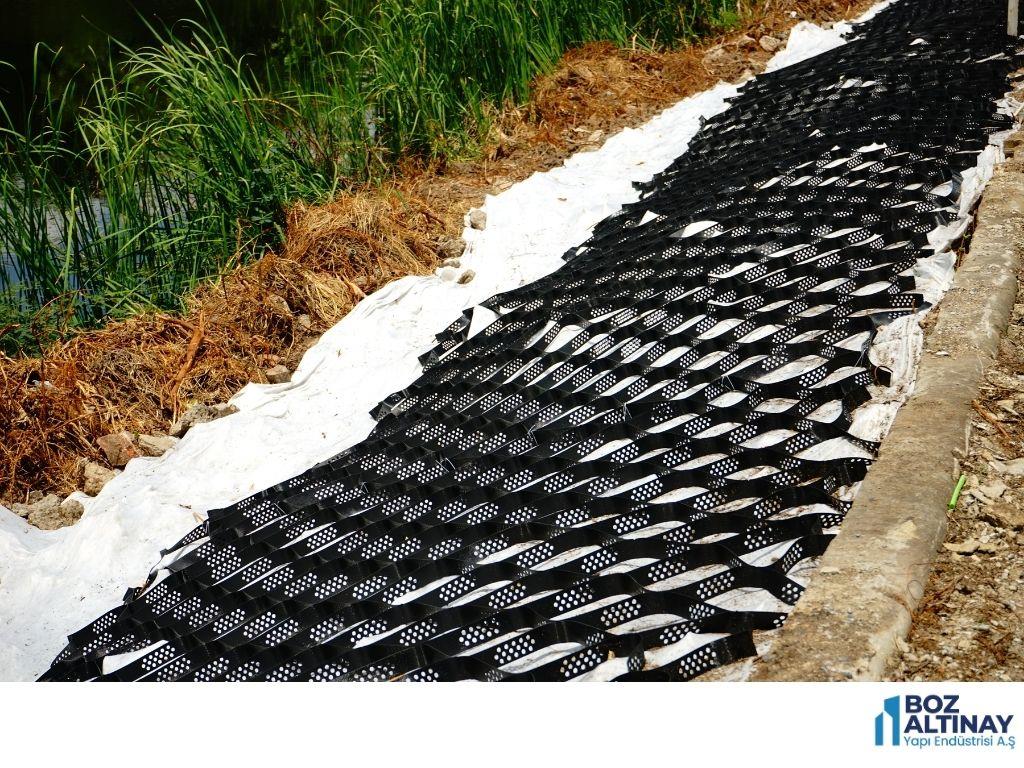
The Geocell Cellular Confinement System is a modern engineering solution designed to overcome these challenges by improving soil stability and controlling the behavior of fill materials under load.
Traditional fill materials tend to move laterally when subjected to repeated loads. This movement gradually weakens the ground structure and contributes to uneven settlement and pavement deterioration.
The Geocell Cellular Confinement System confines aggregate or soil within interconnected three-dimensional cells, limiting lateral displacement and distributing loads more evenly across the subgrade.
As a result, the fill material:
This cellular confinement mechanism creates a more reliable and predictable foundation for a wide range of infrastructure applications.
Beyond improving soil performance, Geocell offers significant engineering and operational benefits.
The confined structure increases the load-bearing capacity of weak soils and improves overall ground performance.
By preventing aggregate movement, the system minimizes rutting, settlement, and surface deterioration.
Improved structural stability reduces the need for frequent repairs and long-term maintenance.
More stable ground conditions help extend the lifespan of roads, industrial areas, and civil engineering structures.
Geocell provides a dependable stabilization method for projects requiring durable and predictable ground performance.
The Geocell Cellular Confinement System is widely used in:
Its versatility makes Geocell suitable for both permanent and temporary ground stabilization applications.
It stabilizes soil and aggregate by preventing uncontrolled lateral movement, improving load distribution, and increasing ground stability.
The three-dimensional cellular structure confines fill material, distributes loads more evenly, and reduces settlement and deformation.
It is commonly used in roads, parking areas, industrial facilities, construction sites, weak soil stabilization projects, and other civil engineering applications.
Yes. Geocell is specifically designed to improve the performance of weak or unstable soils by increasing confinement and load-bearing efficiency.
Yes. By minimizing rutting, settlement, and surface deterioration, Geocell helps reduce maintenance costs and extends infrastructure lifespan.
The Geocell Cellular Confinement System is an advanced ground stabilization solution that enhances soil performance through three-dimensional cellular confinement. By controlling fill material movement, improving load distribution, and reducing long-term deformation, it provides a durable, cost-effective, and reliable solution for modern infrastructure and civil engineering projects.